EY Sweeny Report

An aerial view of a mountainous coastal town at sunrise through a plane window, with part of the plane’s wing visible.

Guide Dogs Australia conducted research through EY Sweeney from February to March 2023 to better understand the needs of people around Australia with low vision or blindness and identify instances of unfair treatment or discrimination.

The research aimed to better understand the needs of people with low vision or blindness when accessing their communities, specifically to:

  • Identify challenges in public places and with transport.
  • Understand usage and confidence of mainstream and assistive technologies.
  • Understand experience with public transport.

A total of 622 people aged 18 years or older from around Australia completed the 2023 survey. Results indicate that people with low vision or blindness face numerous challenges in public places, which greatly impacts their confidence and ability to access and participate in their community. The key research findings and insights are summarised below.

An aerial view of a mountainous coastal town at sunrise through a plane window, with part of the plane’s wing visible.

Four out of five respondents who are blind or have low vision experienced challenges in public places and public transport. In the last two years, over half (54%) of respondents experienced challenges with public transport and two thirds (64%) with public areas, finding supermarkets and shopping centres the most challenging. Issues with footpath and/or kerbs were common across all respondents, with no significant differences by state or location.

Footpaths

Nearly all (96%) respondents have experienced footpath issues in the last two years. Micro mobility (e-scooters, e-bikes), shared paths, shared roads and crowd protection barriers were reported as new emerging footpath issues.

  • Over 60% of respondents reported overhanging branches were the most problematic.
  • Almost 50% of respondents reported footpath works, electric scooters/bikes/micro mobility, shared paths, outdoor dining, and display of goods were a problem.
  • And alarmingly, only one in five respondents are confident (‘very’ or ‘extremely’) to cross when the footpath and the road are at the same level.
Guide Dogs Client Lucy sits smiling on a brick wall. She holds a white cane.

Frontline staff and community awareness.

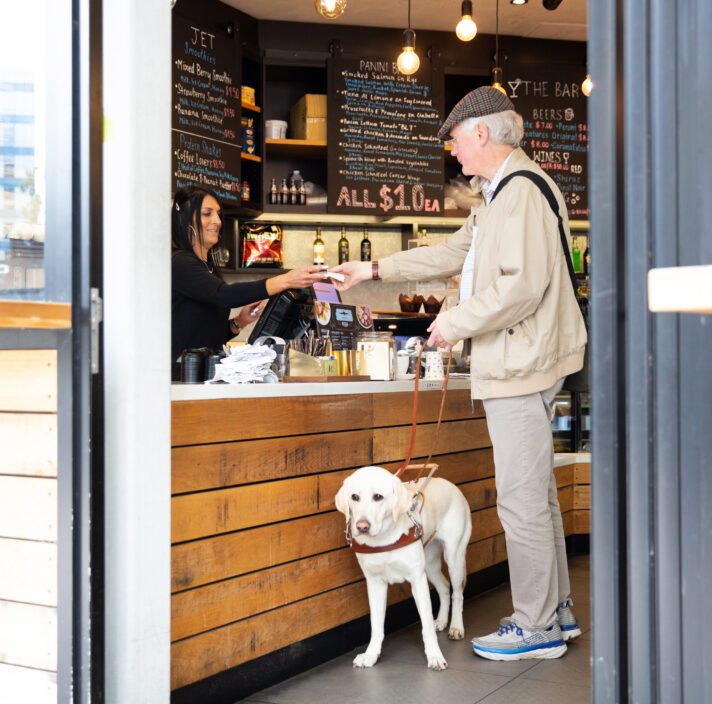
Shopping centres, supermarkets, cafes and/or restaurants continue to be problematic for all respondents, often due to refused entry or navigation difficulties. Hotel and/or hired accommodation was reported as an emerging issue. In all community settings, the key driver of a positive or negative experience was dependent on the skillset of frontline staff (service delivery) and the general community, knowing how to assist people with low vision or blindness and/or understanding Guide Dog access rights.

Public transport, including taxi and rideshare services.

Issues with public transport have seen limited change from previous research in 2010 and 2015, with mixed reports from respondents, stating that some service areas have improved, while others have declined. Apart from infrastructure issues, the overarching driver for a positive or negative experience with public transport is due to the awareness of needs and useful assistance offered by frontline staff. In addition to regular public transport modes, airports and airplanes also were reported as being problematic. Guide Dog Handlers reported persistent refusals and cancellations by both taxis and rideshare services.

A plane flys through blue, purple, and pink clouds in the sky.

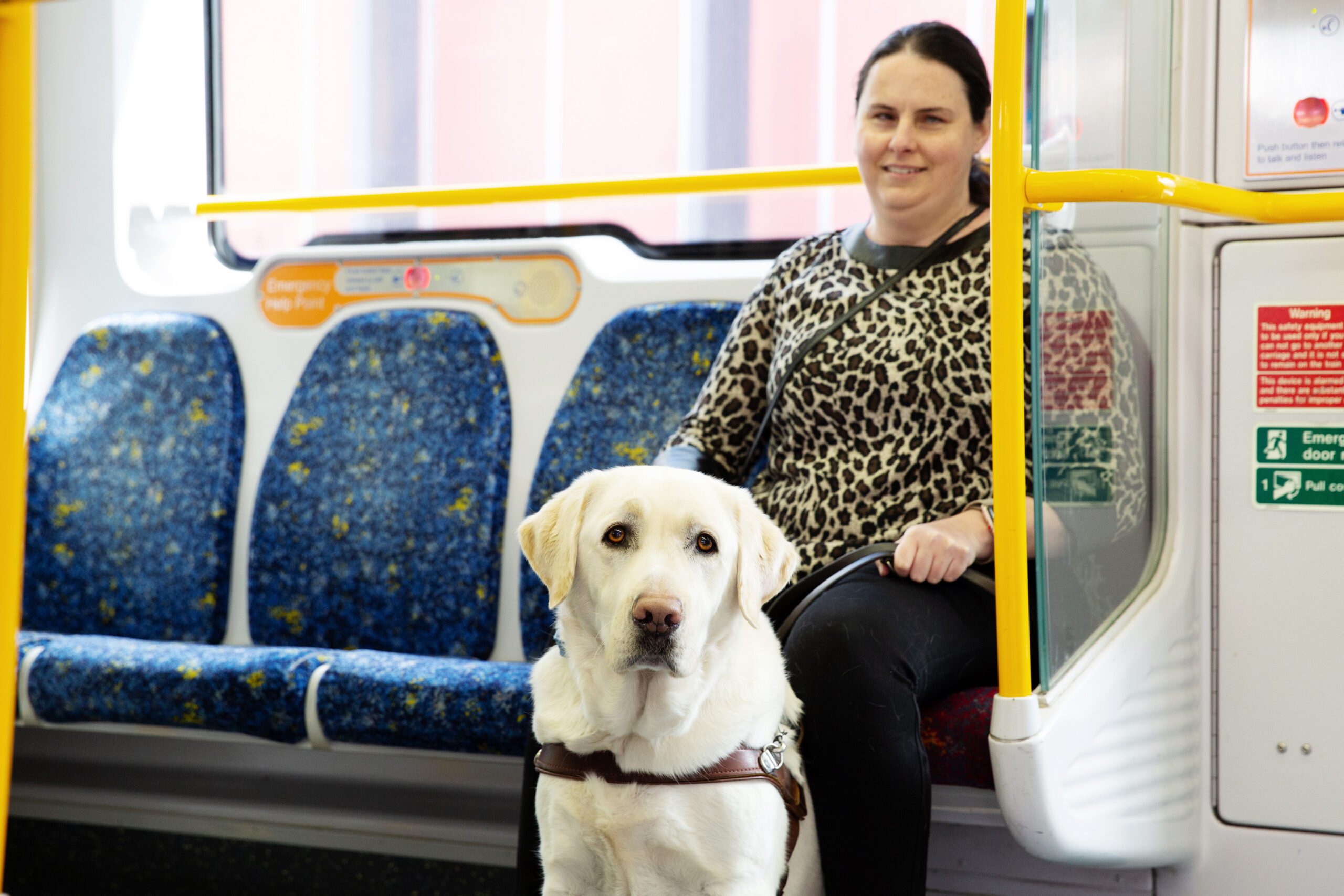
The use of a Guide Dog can increase confidence, but can also raise additional challenges.

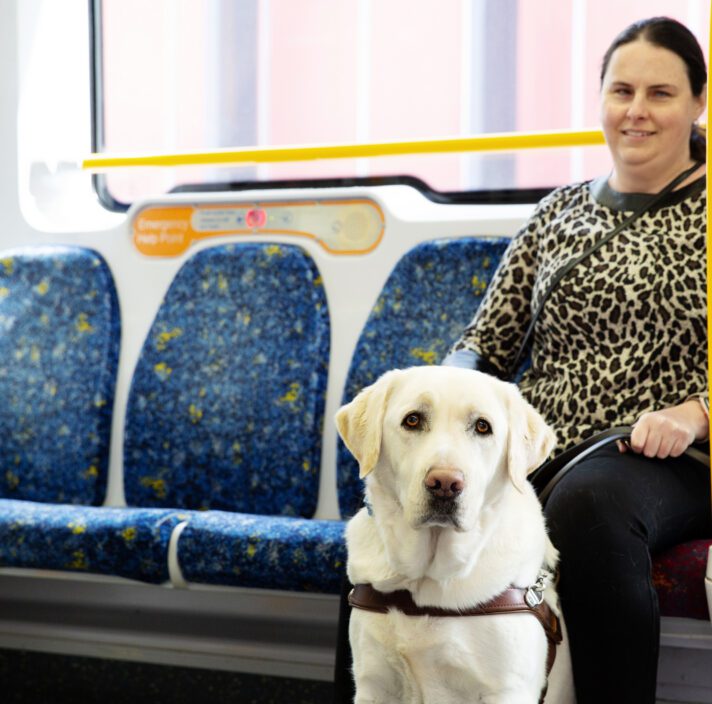
People with low vision or blindness who use a Guide Dog are more likely to be confident (48%) when accessing their communities than those without one (31%). However, the use of a Guide Dog can create additional challenges, particularly with accessing venues and services. A Guide Dog Handler is four times more likely to face an issue with rideshare, three times more likely to face an issue with security guards, more than twice as likely to face an issue with taxis and 50% more likely to face an issue at a café or restaurant than someone not using a Guide Dog. Essentially the challenges relate to the lack of understanding by the public regarding the access rights of Guide Dog Handlers.

Overall, 70% of Guide Dog Handlers experienced challenges in public places compared to non-Guide Dog Handlers at 61%.

Guide Dog refusals or incidents are still prevalent with the highest instances occurring with:

  • Security guards (venues) – 50%
  • Rideshare – 46% (cancelled rides 34%)
  • Taxis – 42% (cancelled rides 30%) Page 3 of 6
  • Cafés and restaurants – 25%
  • Hotels and hired accommodation – 21%
  • And to a lesser extent, at pubs/clubs 13% and Supermarkets/shopping centres 7%

Overall, only one in three people with low vision or blindness are really confident when accessing their community.

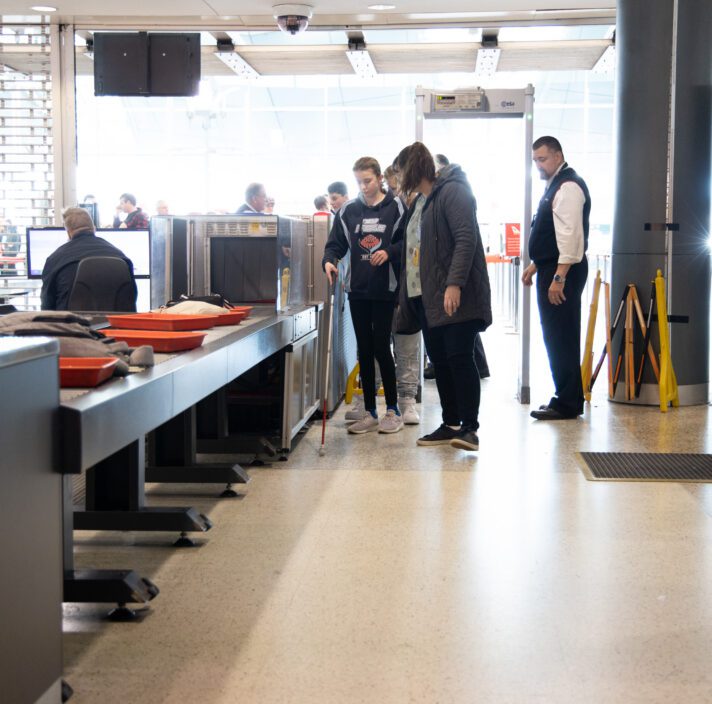
A white cane user walks past the baggage X-ray machine at airport security.

There is high usage of the internet and different assistive technologies, however challenges are encountered.

Almost all respondents (93%) reported they access the Internet. Usage is highest in those aged under 35 at 99% and decreases to 84% for those 65 and older. Note that these results may be influenced by the majority of respondents completing the survey online.

There is a clear need to provide support and training related to technology, as well as advocating for organisations to develop more accessible websites and apps.

Apple mobile devices (iPhone and iPad, 61%) and computers running Windows (52%) are the preferred options for Internet access for people with blindness or low vision.

However, the survey confirms that smart speakers have become a significant tool for accessing information and media, with one in three people using a smart speaker such as Amazon Alexa or a Google Assistant device, likely due to efficiency and ease of use. This rises to 43% for users who identify as blind.

Stand-alone Braille devices also remain a small yet significant means of accessing the Internet at 11%, with respondents aged under 35 twice as likely to use them and people who are blind five times as likely to use them.

Overwhelmingly, 96% of respondents who access the Internet use assistive technology or accessibility options on their devices. As expected, magnification or visual enhancements were most popular for people with low vision, and screen readers for those who are blind.

Voice control was the third most commonly used feature. It is likely that most respondents chose this option to indicate that they use virtual assistants to complete some tasks, rather than controlling all device functions by speaking.

A large percentage (77%) of internet users identified at least one barrier when accessing the Internet. Barriers may be categorised into the following:

External factors:

  • Inaccessible apps and content (33%)
  • Functionality of assistive technology (28%)

Internal factor:

  • User awareness and skill (27%)

Services that people with low vision or blindness would like to access the most (in addition to what’s generally provided) relate to technology and assistive technology support in the form of IT classes and adaptive technology and devices, and socialisation opportunities with recreational groups such as cooking, music, craft, gardening, sport, yoga and fitness.

Additional supports were also requested in the form of job assistance, CV writing, interview skills, support work, networking and linking Clients to job providers to provide work experience opportunities.

Other services mentioned include greater access to decentralised services, help with navigating roads and transport, advocacy on behalf of individuals and community education about living with low vision or blindness and psychological support services.

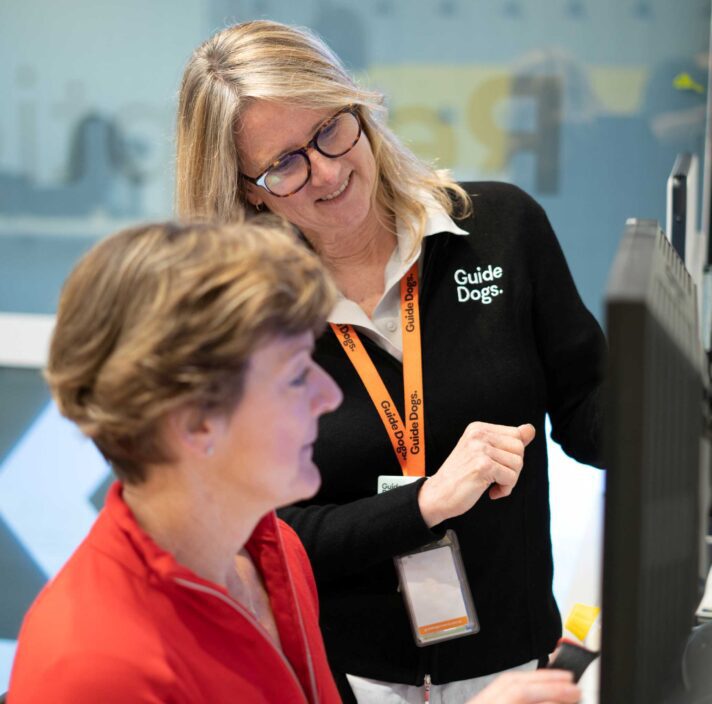
A person is sitting at a computer with a Guide Dogs staff member standing beside them. The Guide Dogs staff member is showing the person sitting at the computer how to it.

The findings from this research will be used to:

  • Increase awareness and reduce discriminatory behaviour towards people with low vision or blindness.
  • Inform advocacy, policy development, direct training and service course content.
  • Inform educational and communication campaigns

Contact.

For further information about this survey or this summary report please email advocacy@guidedogs.com.au

Sample Profile – 622 respondents.

Percentage of respondents by State

  • Western Australia: 3%
  • Queensland: 23%
  • New South Wales: 42%
  • Victoria/Tasmania: 25%
  • South Australia/Northern Territory: 7%

Percentage of respondents by location

  • Metropolitan area: 60%
  • Regional/remote area: 40%

Percentage of respondents by gender

  • Male: 49%
  • Female: 50%
  • Prefer not to say: 1%

Percentage of respondents by age

  • 18 – 34: 21%
  • 35 – 44: 13%
  • 45 – 54: 12%
  • 55 – 64: 18%
  • 65 plus: 29%
  • Prefer not to say: 6%

Percentage of respondents by current vision

  • I have low vision with some functional vision: 71%
  • I am blind with no functional vision: 29%

Percentage of respondents by length of time with low vision/blindness

  • Since birth: 24%
  • Since childhood: 19%
  • Since adult life (under 2 years): 7%
  • Since adult life (2 – 5 years) 13%
  • Since adult life (over 5 years): 37%

Percentage of respondents by Client status

  • Guide Dog Client: 74%
  • Non-Client: 26%

Percentage of respondents by Guide Dog Handler status

  • Guide Dog Handler: 30%
  • Non-Guide Dog Handler: 70%

Ready to continue?

Seems like you have filled this form earlier. Let’s pick up where you left off.