Understanding the challenges
What is the impact of access challenges?
Beyond the practical implications of being told you can’t easily sit and enjoy a coffee with a friend, catch a quick ride out to dinner, or book into the hotel of your choice, comes how this can make you feel.
A loss of confidence and concerns for safety were some of the broader impacts expressed by people with low vision or blindness in a recent Guide Dogs Client focus group about access challenges.
One third of Guide Dog Handlers from across Australia, questioned in our 2021 Guide Dog Handler Survey, told us they had been illegally refused access to a public space, event, business premises, taxi, ride-share or public transport vehicle because of their Guide Dog in the last year.
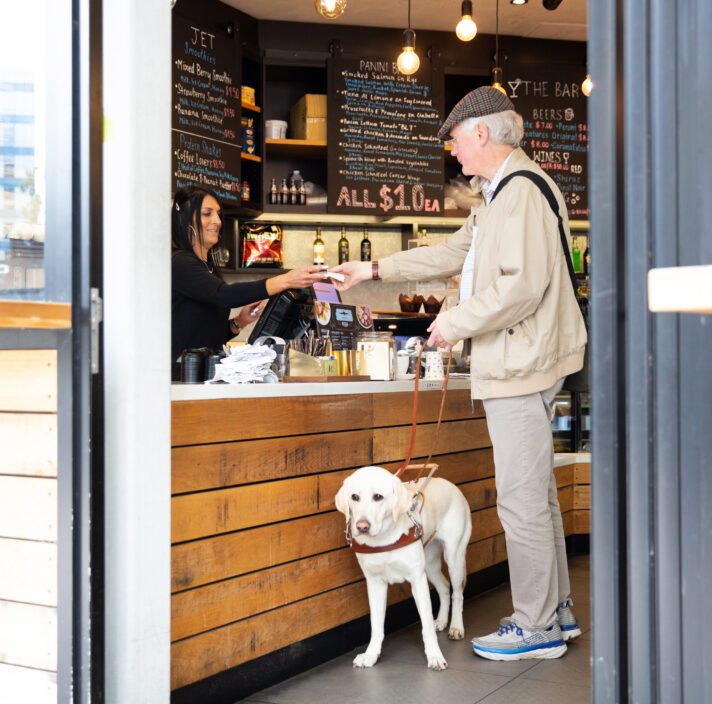
Of the Handlers that reported refusals, 68% experienced a refusal in a taxi or ride-share, 48% at a food establishment and 28% at a retail outlet.
Guide Dog Handlers said this made them feel frustrated and annoyed, but also angry, upset and often embarrassed.
But it’s not all bad news.
While COVID-19 has in some ways made it more difficult for people with low vision or blindness to physically distance in public spaces, Clients say they have had increased access to telehealth services, accessible technology and information online.
At Guide Dogs we also work with industry bodies, government departments and private companies to provide access consulting services and training to ensure places in our community – including private property, public environments, workplaces, sporting venues, and a range of other spaces – comply with Australian Disability Access Regulations.